





Unveiling the Shak Samvat: A Historical Timekeeper
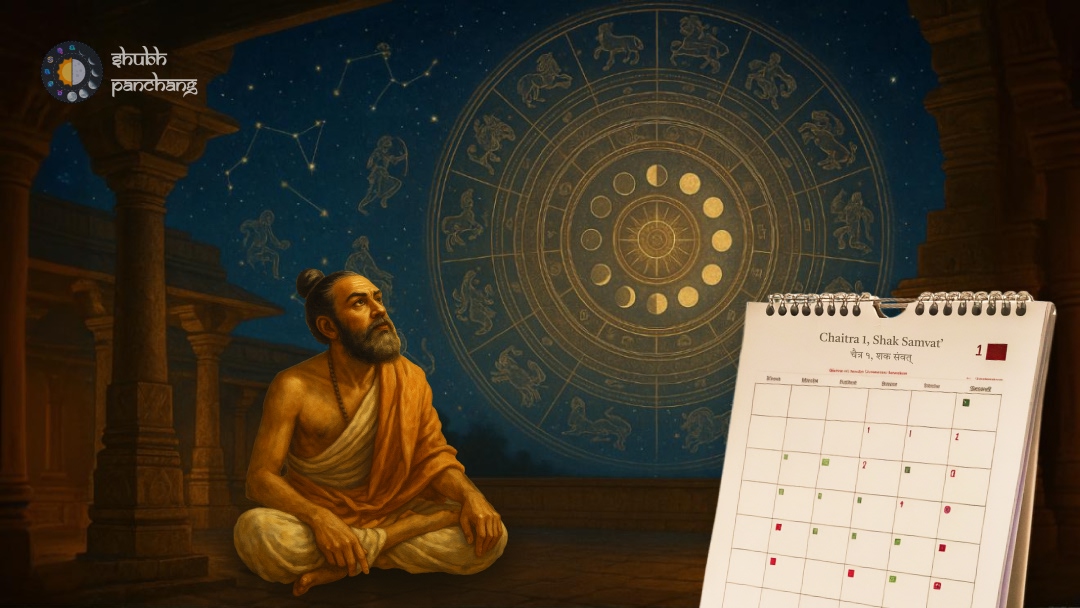
Ever wondered how Hindu calendars calculate dates for festivals and auspicious events? A key player is the Shak Samvat, a historical era that forms the backbone of many traditional calendars. After years of working with the Panchang, I've noticed many people are curious about its intricacies. Let's unravel its story.
From Ancient King to Government Calendar
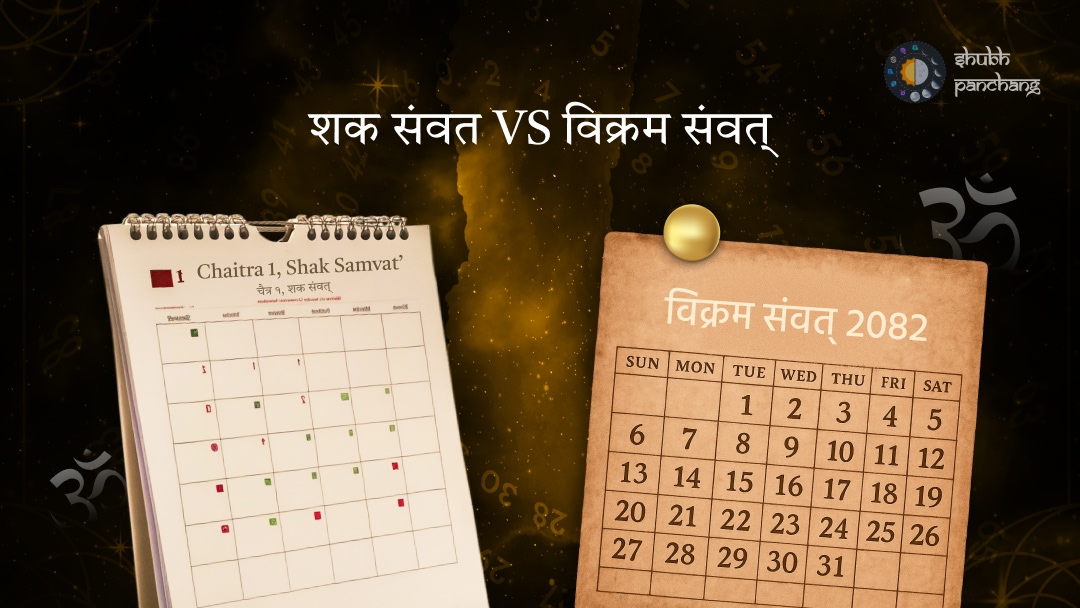
The Shak Samvat era, also known as the Shalivahana Shak era, began in 78 CE. Tradition holds it marks the victory of King Shalivahana. Interestingly, unlike some other eras, it isn’t tied to a specific religious figure or event. It's a secular system, which is one reason why it was adopted as the basis for the Indian National Calendar after independence. I've always found this secular root fascinating because it highlights the practicality of the Shak Samvat for administrative purposes across diverse beliefs.
Shak Samvat in Modern India: The Official Calendar
But what if I told you that this ancient system plays a pivotal role in the official calendars of India? Indeed, the Indian National Calendar, adopted in 1957, uses the Shak Samvat alongside the Gregorian calendar. This calendar appears in government publications, news broadcasts, and official communications, ensuring uniformity and representing India's heritage. It’s quite amazing how an age-old tradition finds its place in modern governance!
The Astronomical Foundation: A Dance of Sun and Moon
The beauty of the Shak Samvat lies in its astronomical precision. It's a lunisolar calendar, meaning it considers both the Moon's phases (lunar months) and the Earth's orbit around the Sun (solar years).
Solar Months: The solar months are based on the Sun's entry into different zodiac signs (Rashis). Each month begins when the Sun transits into a new Rashi.
- Chaitra: When Sun enters Aries (Mesha)
- Vaishakha: When Sun enters Taurus (Vrishabha)
- Jyeshtha: When Sun enters Gemini (Mithuna)
Lunar Months: Lunar months are determined by the Moon's phases and its position relative to Nakshatras. Each lunar month starts after the new moon (Amavasya).
Tithis and Festivals: Unlocking Auspicious Dates
Here's where things get interesting! The Shak Samvat is instrumental in calculating Tithis, the lunar days. Each lunar month has 30 Tithis, divided into two fortnights: the Shukla Paksha (waxing moon) and Krishna Paksha (waning moon). The precise calculation of Tithis, based on the angular relationship between the Sun and Moon, is vital for determining festival dates. After years of practice, I’ve noticed how accurately it marks these transitions. I remember one year, a particular festival date was hotly debated, but the Shak Samvat-based calculation proved definitive.
Muhurats: Timing Your Life with Cosmic Precision
Furthermore, the Shak Samvat is crucial in selecting Muhurats – auspicious timings for important events like weddings, housewarmings, and starting new ventures. The Panchang considers the day, Tithi, Nakshatra, Yoga, and Karana, all within the Shak Samvat framework, to pinpoint the most favorable time. But what if you were to ask if it *really* works? Well, I've seen firsthand how aligning actions with these auspicious timings can bring positive results. There’s a certain peace of mind that comes with knowing you've started something at the right moment.
Regional Variations: A Tapestry of Traditions
The system isn't without its regional variations. Different regions might use slightly different versions of the Panchang based on local traditions and astronomical models. However, the core principle of the Shak Samvat remains consistent. And honestly, these regional nuances are part of the beauty of Hinduism – a tapestry of diverse practices woven together by common threads.
Integrating Shak Samvat Wisdom into Daily Life
So, how can you use this knowledge in your daily life? Start by understanding the current Tithi and Nakshatra each day. Many online resources and apps provide this information. Notice how the energy of the day feels. Over time, you'll develop a sense of how the cosmic rhythms influence your own experiences. Initially I thought, 'This is too complicated'. But then, I started small, tracking the moon phases, and now it's an invaluable tool.
The Enduring Legacy: Connecting Past, Present, and Future
The Shak Samvat is more than just a calendar era; it's a bridge connecting us to ancient wisdom and astronomical understanding. It informs our festivals, guides our auspicious timings, and reminds us of the interconnectedness of the cosmos. Embrace its knowledge, and you'll find a deeper appreciation for the richness of Hindu traditions. As you delve deeper, consider: What auspicious moment will you align with the Shak Samvat's wisdom this week?